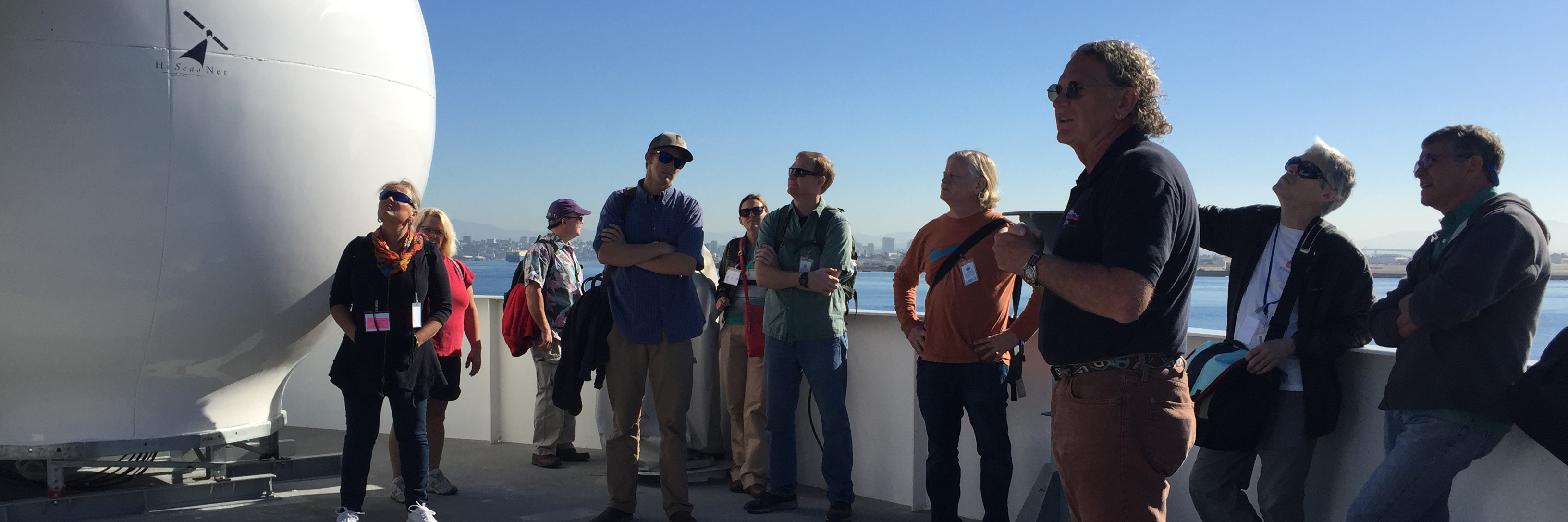
Research Vessel Technical Enhancement Committee
Mission and Purpose
The Research Vessel Technical Enhancement Committee (RVTEC) is a standing technical committee of the University-National Oceanographic Laboratory System (UNOLS). Its mission is to support the scientific productivity of research programs that rely on research vessels and oceanographic facilities, while fostering technical excellence in sea-going operations.
RVTEC provides a collaborative forum for technical personnel across the U.S. Academic Research Fleet (ARF). The committee works to:
- Sharing technical knowledge and best practices for vessel support, instrumentation, and operations.
- Enhancing the skills of marine technicians, engineers, IT specialists, and other technical personnel.
- Evaluate emerging technologies and their applications aboard research vessels.
- Organizing meetings, workshops, and training to strengthen the fleetwide technical community.
RVTEC also promotes the exchange of technical information among institutions, supports professional development across the UNOLS community, and provides guidance on technology adoption and fleetwide technical standards.
How RVTEC Supports You
RVTEC is a peer-driven community designed to support the day-to-day realities of shipboard operations. Whether troubleshooting instrumentation, solving a network issue at sea, or sharing lessons learned across vessels, RVTEC connects technicians with colleagues across the fleet.
Participation provides access to:
- A trusted network of technicians across the U.S. Academic Research Fleet
- Fleetwide best practices, technical documentation, and shared lessons learned
- Training opportunities and seminar series that strengthen safety and technical skills
- A forum to help shape fleet standards, policies, and the adoption of new technologies
RVTEC ensures that knowledge gained on one vessel benefits the entire fleet.
Who RVTEC Serves
RVTEC serves the technical professionals who keep science at sea running smoothly, including marine and electronic technicians, IT specialists, engineers, and shoreside technical managers. It also serves:
- Ship operators and institutions managing federally funded oceanographic research vessels.
- Chief scientists and research teams relying on reliable instrumentation, data systems, and cyberinfrastructure.
- Federal partners such as the National Science Foundation (NSF), Office of Naval Research (ONR), National Oceanic and Atmospheric Administration (NOAA), and U.S. Geological Survey (USGS) by providing fleetwide technical expertise.
- The broader oceanographic research community through improved safety, data quality, and technical innovation
How RVTEC Achieves Its Mission
RVTEC fosters collaboration and technical advancement through annual meetings, workshops, seminars, and specialized subcommittees. These groups address key technical areas and develop resources, guidance, and workflows used across the fleet.
Current groups include the Satellite Network Advisory Group (SatNAG), Cyber Infrastructure Working Group (CIWG), Tech Training Subcommittee, and Multibeam Advisory Committee (MAC).
By connecting technical professionals across institutions, RVTEC strengthens the people, systems, and knowledge that make oceanographic research possible.
Annual RVTEC Meeting
The Annual Research Vessel Technical Enhancement Committee (RVTEC) Meeting brings together marine technicians, engineers, IT specialists, and shoreside technical managers from across the U.S. Academic Research Fleet.
The meeting provides a collaborative forum to:
- Share technical updates and emerging challenges
- Review new technologies and best practices
- Participate in hands-on workshops
- Strengthen professional networks and foster problem-solving across institutions
RVTEC Subcommittees & Working Groups
RVTEC’s subcommittees focus on specialized technical areas across the fleet. These groups develop best practices, provide technical guidance, and create resources used by technicians and operators across institutions.
SatNAG – Satellite Network Advisory Group
The Satellite Network Advisory Group (SatNAG) provides guidance on satellite communications and network infrastructure for the U.S. Academic Research Fleet. It advises on fleetwide connectivity performance, future technology needs, cybersecurity considerations, and communication policy development, while serving as a liaison between technicians, institutions, and federal program managers.
CIWG – Cyber Infrastructure Working Group
The Cyber Infrastructure Working Group (CIWG) focuses on networking, cybersecurity, and onboard computing environments aboard research vessels. It develops and promotes best practices for secure network architecture, supports fleet cyber initiatives, and provides a collaborative forum for technicians to address emerging cyber and IT challenges.
Tech Training Subcommittee
The Tech Training Subcommittee supports the professional development of marine technicians by providing technical documentation, instructional resources, and best practices to enhance safety, proficiency, and operational effectiveness at sea.
The subcommittee organizes the “What Went Well Wednesday” seminar series, which reviews real-world equipment failures and operational challenges to identify root causes and share lessons learned across the fleet. The subcommittee also helps coordinate technician training cruises, contributes to development of the RVTEC Wiki as a shared technical resource, and highlights important professional topics such as work-life balance. To reach out or get involved email techtraining@unols.org.
RVTEC Wiki Group
The RVTEC wiki group was formed as a direct result of interest from the community, specifically for a central location for all the resources and documentation of shipboard instrumentation. Several technicians are a part of this working group, combining several years' worth of institutional knowledge and tips & tricks. The wiki is a collaborative effort to support marine technicians by providing easy access to reference materials, standard operating procedures, technical guides, and community-sourced solutions.
All are welcome to contribute! If you are interested in becoming an active editor or contributing member of the wiki, please reach out to rvtecwiki@unols.org to get started. To access the full scope of information on the wiki, please create a user account on our homepage, https://rvtecwiki.unols.org/doku.php?id=welcome.
Multibeam Advisory Committee (MAC)
The Multibeam Advisory Committee (MAC) ensures consistent, high-quality multibeam data collection across the U.S. Academic Research Fleet. MAC brings together operators, funding agencies, and technical experts to provide guidance on multibeam systems and best practices.
While currently focused on deep-water systems, MAC supports knowledge exchange for both deep- and shallow-water operations, helping ensure optimal performance and data quality across the fleet.
Additional Fleet Support Services:
SURF-IT (Shared Unified Research Fleet IT Support)
SURF-IT provides no-cost IT and cyberinfrastructure support to all UNOLS vessel operators. The pilot program focuses on Regional and Coastal vessels, offering services such as FortiGate firewall deployment, network architecture guidance, shipboard and shoreside integration, security planning, and support for community-driven projects like OpenVDM and Coriolix. Led by experts from UAF, UW, URI, and other cybersecurity specialists, SURF-IT aims to strengthen fleet IT systems and build a sustainable shared support model. For consultations or project inquiries, email surfit@unols.org.
ARFSEC (Cybersecurity Program for the United States Academic Research Fleet)
The ARFSEC project runs the cybersecurity program for the ARF. The ARFSEC delivers services to establish and improve technical and programmatic cybersecurity controls to the ships and ship operators of the ARF at no cost to the operators. Examples of these services include: Deploying and guiding deployment by the operators of cyberinfrastructure to allow ARFSEC to perform log and network monitoring, analysis and alerting. General technical cybersecurity consulting to ship operators. Delivering cybersecurity awareness training. Provide resources to support ship operators in conducting their own tabletop exercises and cybersecurity incident drills. Providing cybersecurity assessments. Guidance and assistance with documenting compliance with regulations, and preparing for inspections. Participate in NSF ship inspections assessing cybersecurity posture. Contact us at: arfsec@iu.edu
HiSeasNet
HiSeasNet is a satellite communications network providing continuous Internet connectivity to oceanographic research vessels. Serving the U.S. Academic Research Fleet, HiSeasNet enables real-time data transmission to shore, supports email, voice, and video communications for scientists and crew, and facilitates educational and outreach activities at sea. By extending reliable Internet access to seagoing laboratories, HiSeasNet enhances research, collaboration, and learning across the fleet. https://hiseasnet.ucsd.edu/
Rolling Deck to Repository (R2R)
The Rolling Deck to Repository (R2R) program manages and preserves underway data collected on U.S. research vessels, ensuring it is properly archived and accessible for future oceanographic research. It catalogs and submits environmental sensor data from each cruise to long-term public repositories like NOAA NCEI, with data provided directly by vessel operators.
R2R also supports standardized documentation, provides tools for tracking shipboard data collection, and conducts post-cruise (and some near-real-time) quality assessments to evaluate data completeness, instrument performance, and overall data quality.
University of Hawaii Currents Group (UHDAS)
The University of Hawaii Currents Group develops, maintains, installs and supports the University of Hawaii Data Acquisition System (UHDAS) for shipboard ADCP instrumentation on the US research fleet. They also provide data processing software and services.
Additional Facilities
Additional facilities (equipment and services) that are available to assist shipboard science projects. Some of these facilities are billed through the vessel operator while some are billed through the science grant. Some of the facilities need to be reserved very early in the planning process. If you hope to use a facility, it is important to contact the facility point of contact during the science proposal writing stage to understand the facility and its limitations, whether it is available, and any fees associated with its use.
Get Involved
RVTEC encourages technicians, operators, and technical managers to actively participate in the community. Opportunities include:
- Serving on a subcommittee or working group
- Presenting at the Annual RVTEC Meeting
- Contributing technical documentation or best practices
- Participating in training and seminar series
- Joining the RVTEC Listserv
The RVTEC Listserv is a primary way technicians connect across institutions to share knowledge, troubleshoot challenges, and stay informed about meetings, job postings, and fleet updates.
To join the listserv, contact tara@unols.org.
Why RVTEC Matters
RVTEC connects technical professionals across the U.S. Academic Research Fleet, creating a collaborative environment where knowledge, experience, and innovation are shared.
By strengthening the people, systems, and technical expertise behind research vessels, RVTEC helps ensure that oceanographic science at sea remains safe, efficient, and at the forefront of technological advancement.
UNOLS Contact for RVTEC: Tara Clemente tara@unols.org and Alice Doyle alice@unols.org